We've entered a new era of digital creation, defined by a startling paradox: while the cost to generate a stunning image or video has plummeted to nearly zero, the cost to manage, verify, and reproduce that asset has skyrocketed.
The industry has rapidly moved beyond the phase of “Generative Novelty,” where a text-to-image result was impressive on its own, into a more mature phase of “Generative Integration.” In 2026, the real value of an AI-generated asset lies not in its final appearance, but in the ability to control its creation, reproduce it reliably, and trace its lineage.
This post explores five of the most surprising and impactful truths about how creative work gets done in the current AI landscape, revealing a world where the process has become more valuable than the product.
1. The Recipe Is Now More Valuable Than the Result
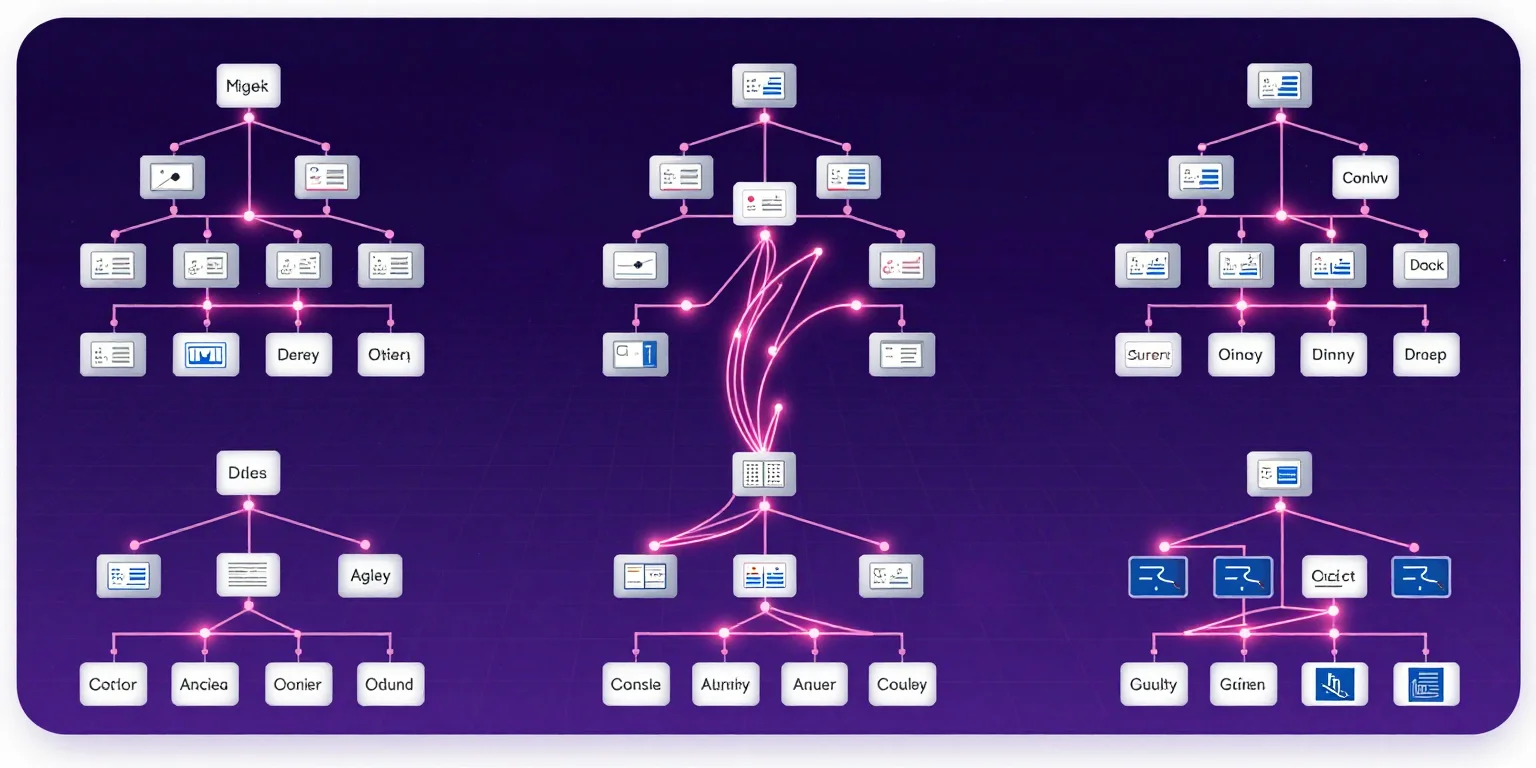
The most significant shift in creative thinking is the emergence of the “Workflow as Asset” paradigm. The final output is now often seen as a temporary byproduct of a much more valuable piece of intellectual property: the process that created it.
In 2026, the node graph that generates an asset is often more valuable than the asset itself, as it represents reusable intellectual property (IP) that can be re-parameterized for future projects.
This has led to two dominant creative cultures. The first is the “Modular Ecosystem” of tools like ComfyUI, where creators act as “Visual Engineers.” They build intricate pipelines not just for images, but as general multimodal workflow runners for video and audio. The second is the “Curatorial Ecosystem” of platforms like Midjourney, where users function as “Creative Directors,” steering powerful models with precise references and commands.
This shift is critical because it changes what creators save, share, and sell. The focus has moved from owning a static collection of pixels to owning a reproducible, adaptable process. This transition to valuing the process has led to a powerful—and fragile—new technical standard for how that process is stored.
2. Your PNG Is Secretly a Computer Program (But Social Media Will Break It)
In the workflow-first world of ComfyUI, an incredible feature has become standard practice: the entire creative recipe, or node graph, is automatically saved directly into the metadata of the final PNG file. This “image-as-recipe” mechanism allows another user to simply drag that PNG into their own ComfyUI interface to load the exact process used to create it, enabling perfect reproducibility.
However, this powerful system is surprisingly fragile. This embedded workflow data is often destroyed when the image is uploaded to platforms that recompress or convert files. Sharing a workflow-bearing PNG on Facebook can cause the platform to convert it into a standard JPEG, stripping the metadata and breaking the chain of reproducibility.
This flaw means that one of the most important breakthroughs for creative collaboration is easily undone by everyday web practices, leading to widespread user frustration and a constant search for reliable ways to package and share both the image and its underlying recipe.
3. Aesthetics Are Now Tradable Code
In the Midjourney ecosystem, artistic style has been commodified. Using a simple command called Style Reference (--sref), users can append a code to a prompt to invoke a specific and complex aesthetic. A user might find a style they like, grab its unique code, and apply that “visual vibe” to a completely different subject.
This has given rise to what is known as the “Sref Economy” or “Midlibrary Behavior,” where creators actively find, curate, and trade these style codes as valuable, reusable assets. It's part of a larger strategic push by Midjourney toward controllable, iterative workflows, with Version 7 also introducing “Omni Reference” to carry consistent characters and objects into new scenes.
This development is counter-intuitive and profound: it marks a fundamental shift from describing an artistic style with ambiguous words to controlling it with a precise, shareable line of code. Aesthetics have effectively become a tradable commodity.
4. A Hard Deadline Is Forcing AI to Show Its Work
The abstract conversation about AI transparency is over, replaced by concrete regulatory deadlines. Two key timelines are forcing a rapid professionalization of the industry: the EU AI Act's transparency obligations are set to apply as of August 2026, and California's AI Transparency Act (SB 942) has its core requirements taking effect on August 2, 2026.
These legal deadlines are driving the fast adoption of technical standards designed to show an asset's origin. C2PA's “Content Credentials” provide a cryptographically verifiable manifest of an asset's history, while the IPTC Photo Metadata Standard 2025.1 has added new fields specifically for documenting AI prompts and systems.
The impact is clear: these are not vague guidelines but imminent legal requirements. They are creating a material change in what constitutes “good asset management,” demanding that professionals and enterprises adopt auditable disclosure workflows to prove how their content was made.
5. Your Commercial Rights Are a Minefield
Attempting to commercialize AI-generated assets in 2026 means navigating significant nuance and risk. Midjourney's Terms of Service, for instance, state that users own the assets they create, but this ownership comes with critical exceptions. Most notably, enterprises with over $1,000,000 in annual revenue must have a Pro or Mega plan to own their assets for company use, and all ownership is subject to the intellectual property rights of third parties.
The defining risk factor for commercial use is the cloud of active litigation from major studios. Copyright infringement lawsuits have been filed against Midjourney by industry giants including Disney, Universal, and Warner Bros. Discovery, creating a chilling effect for those looking to use the platform for commercial work.
This uncertainty has led to a fragmented and inconsistent marketplace. While Adobe Stock accepts generative AI content that is properly labeled, Shutterstock explicitly does not accept any AI-generated content from its contributors. For creators, this means that monetization is no longer just about the quality of an image. It now depends heavily on meticulous documentation, verifiable provenance, careful risk management, and the ability to navigate a complex patchwork of conflicting platform policies.
The Age of the Living Asset
The era of AI novelty is behind us. In its place is a professionalized ecosystem where tradable aesthetics and reproducible recipes are colliding with the hard realities of looming legal deadlines and a minefield of commercial rights.
The focus has irrevocably shifted from the final image to the verifiable process behind it. The most successful creators and organizations will be those who master the stewardship of that process.
As the process becomes the product, how will you measure the value of creativity in an age of infinite, reproducible art?
Key Takeaways
- 1.Workflows are the new IP—the node graph that creates an asset is often more valuable than the asset itself
- 2.Metadata is fragile—social platforms strip the embedded workflows that make AI images reproducible
- 3.Style has become code—Midjourney's sref economy lets creators trade aesthetics as precise, shareable values
- 4.Compliance deadlines are real—EU AI Act and California SB 942 require auditable provenance by August 2026
- 5.Commercial use requires documentation—monetization now depends on verifiable provenance, not just quality