
Everyone's talking about what AI systems will be banned under the EU AI Act. Almost nobody's talking about Article 12. That's the requirement that will determine which organizations can actually operate AI in production—and which ones can't.
The public discourse around the EU AI Act has focused on dramatic prohibitions: social scoring systems, real-time biometric surveillance, manipulation of vulnerable groups. These make headlines and generate debate about AI ethics and governance.
But for organizations actually deploying AI in production—creative agencies, marketing teams, content producers—the more immediate challenge is mundane in comparison: record-keeping.
Specifically, Article 12 of the EU AI Act. It requires that high-risk AI systems “technically allow for the automatic recording of events (logs) over the lifetime of the system.”
The key word is automatic. This isn't about manual documentation after the fact. It's about building systems that generate their own audit trails as they operate.
And that's an infrastructure requirement that most AI tooling doesn't meet.
What the Act Actually Requires
Article 11 establishes the technical documentation requirements. Providers must prepare documentation that demonstrates compliance and provides authorities with information to assess that compliance. This documentation covers the AI system's design, development, testing, and evaluation—and it must remain accurate and updated for the system's entire operational life.
Article 12 goes further. High-risk AI systems must “technically allow for the automatic recording of events (logs) over the lifetime of the system.”
The requirements are specific. According to Annex IV of the Act, technical documentation must include a complete description of the AI system's development process—design specifications, data requirements, testing procedures—along with information about performance, risk management, changes throughout the lifecycle, and compliance with EU standards.
For record-keeping, the logs must enable traceability of the system's functioning. Article 19 requires deployers to keep these automatically generated logs for minimum periods and ensure appropriate levels of traceability.
Here's the part that makes this an infrastructure problem rather than a process problem: the Act requires systems to be technically capable of automatic recording. You can't retrofit this with better procedures. Either your architecture supports it or it doesn't.
Why Current AI Tooling Fails This Test
The AI industry optimized for generation speed. It didn't optimize for remembering what it generated.
Consider what happens in a typical generative AI workflow. A creative team uses Midjourney to generate concept art, refines outputs in Stable Diffusion, composites results in Photoshop with AI-assisted tools, and exports final assets to clients. At each step, critical information disappears.
Midjourney offers no metadata export capability. The prompts, parameters, and model versions that produced an image exist only in Discord chat history—if you can find them. Stable Diffusion workflows are more flexible, but tools like ComfyUI produce complex JSON workflow files that can reach 10 MB each and become corrupted or unmanageable at scale.
This creates what I think of as a metadata black hole. Every AI-generated asset suffers from what you might call workflow amnesia: the complete loss of its creation context. When a designer needs to recreate or iterate on a successful generation, they face expensive guesswork. When a compliance officer needs to demonstrate audit trails, they face impossible archaeology.
The volume problem compounds this. With more than 34 million AI images generated daily as of 2024—a number that continues to grow—manual documentation isn't just inefficient. It's mathematically impossible. You can't have humans log the provenance of content generated at that scale. Either your systems capture it automatically, or it doesn't get captured.
The C2PA Convergence
While individual tools struggle with provenance tracking, an industry standard is emerging: C2PA (Coalition for Content Provenance and Authenticity).
C2PA creates cryptographically signed manifests that travel with content. These manifests establish a verifiable chain of custody: where content originated, what tools created it, how it was modified, and who was responsible at each step. The signatures are tamper-evident—any modification to the content or its provenance claims is detectable.
The coalition includes major players across the AI and media landscape. Google announced expanded C2PA support in July 2025, applying content credentials to AI-generated content across its services. OpenAI has joined the C2PA steering committee and implemented C2PA for Sora outputs. Adobe, Microsoft, and the BBC are founding members. Even the Library of Congress has formed a working group exploring C2PA implementation for cultural heritage preservation.
Version 2.2 of the C2PA specification, released in May 2025, includes stricter technical requirements for validating provenance history—specifically targeting protection against tampering attacks that could alter or fabricate provenance chains. The specification is now on an ISO fast-track, signaling that C2PA is evolving from an industry initiative into a formal international standard.
Here's why this matters for EU AI Act compliance: the regulation requires provenance tracking, and C2PA provides a technical standard for implementing it. Organizations building AI infrastructure without C2PA support are creating technical debt they'll need to address later—likely under deadline pressure and at greater cost.
The industry is converging on this standard whether individual organizations are ready or not. The question isn't whether to support content provenance. It's whether to build it in now or retrofit it later.
What Compliance-by-Design Actually Looks Like
If the EU AI Act requires automatic recording of events throughout an AI system's lifetime, what does that architecture actually look like? The patterns aren't exotic—they're established approaches from data engineering, adapted for AI workflows.
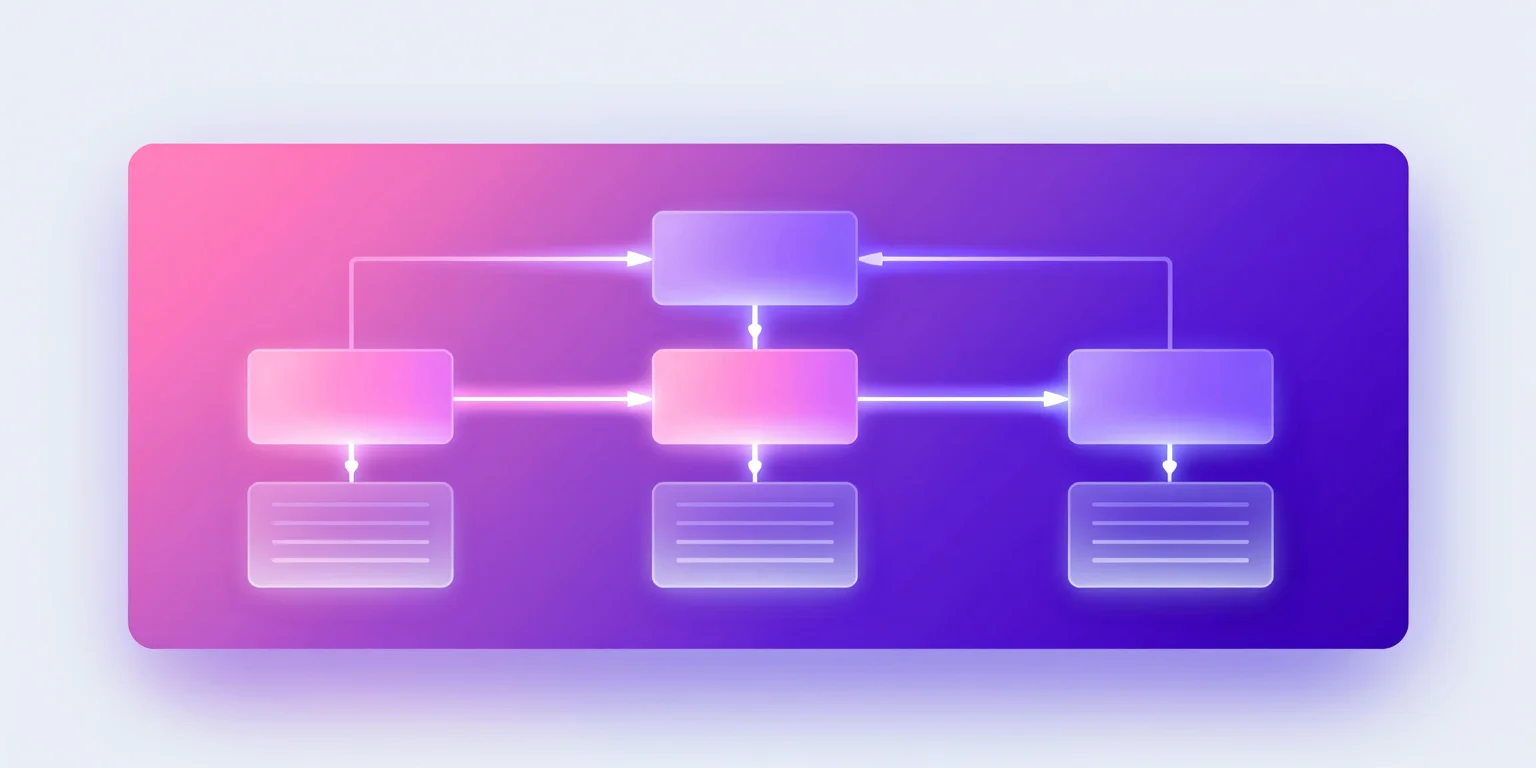
Pattern 1: Immutable Event Logging. Every interaction with the system gets recorded at the time it occurs, not reconstructed afterward. This means append-only data structures where you never update existing records—you only insert new ones. In practice, this looks like temporal tracking on every record: a load timestamp indicating when the record was created, and a source field indicating where the data came from. When an asset's metadata changes, you don't overwrite the previous state. You create a new record and let the previous one remain as historical context.
Pattern 2: Agent Attribution. The EU AI Act's Article 14 requires human oversight. To demonstrate that humans remained in control of AI systems, you need to distinguish between actions taken by human users, AI models, and automated processes. This means treating every participant in your system—whether a person, a model, or a service—as an identifiable agent with its own recorded actions. When content is created or modified, the system captures not just what changed but who or what made the change.
Pattern 3: Content-Addressable Storage. Cryptographic hashing creates immutable references to content. When you generate a SHA-256 hash of a file, you create a unique identifier that can verify whether the content has been tampered with. Store the content by its hash, and you get automatic deduplication plus tamper detection. Combined with C2PA manifests, this creates a robust chain of custody.
Pattern 4: Lineage Graph Structures. Track relationships between prompts, parameters, and outputs. Enable the “right to explanation” by preserving decision history. Support complex multistep workflows where multiple inputs produce outputs, and outputs become inputs for further processing.
These aren't exotic requirements—they're established patterns from data engineering (Data Vault methodology, event sourcing, CQRS). The innovation is applying them to AI asset management in ways that satisfy regulatory requirements while remaining practical at scale.
The Closing Window
The timeline pressure is real but navigable.
Full high-risk AI system requirements take effect on August 2, 2026. Systems in the market now need to comply—which means organizations deploying AI are already operating under these rules. Finland became the first EU member state to activate national supervision laws on January 1, 2026, offering an early preview of how enforcement will work in practice.
Jurisdictional convergence. The EU AI Act isn't isolated. California's AI Transparency Act (SB 942), extended via AB 853, takes effect on the same date—August 2, 2026—with similar disclosure requirements. This isn't coincidence; it's regulatory alignment. The pattern from GDPR is repeating: EU regulation sets a global baseline, and other jurisdictions follow. Organizations building for a single regulatory environment will face repeated retrofits.
The agentic acceleration. When AI agents begin generating content autonomously at scale—which industry analysts suggest will happen within 18 months—manual compliance processes become impossible. You cannot have humans document the provenance of millions of assets generated by automated systems. Either your infrastructure captures that information automatically, or it doesn't get captured at all.
The cost-benefit analysis is straightforward. Building audit capability into new systems represents incremental cost. Retrofitting audit capability into existing systems requires architectural rewrites. And penalties for noncompliance reach €15 million or 3% of global turnover for high-risk violations, with maximum penalties of €35 million or 7% for prohibited practices.
Organizations that build compliant infrastructure now will have competitive advantage when enforcement intensifies. Those waiting will face expensive retrofits under deadline pressure—and regulatory scrutiny while they scramble to comply.
Key Takeaways
- 1.Article 12 is an architecture requirement, not a process requirement: Systems must technically allow automatic recording of events—you can't retrofit this with better procedures
- 2.Current AI tooling creates a metadata black hole: Midjourney and Stable Diffusion workflows all lose creation context through normal usage
- 3.C2PA is becoming the industry standard for content provenance: Now at version 2.2 and on an ISO fast-track, with adoption from Google, OpenAI, Adobe, Microsoft, and others
- 4.Compliance-by-design patterns already exist: Immutable logging, agent attribution, content-addressable storage, and lineage graphs satisfy requirements—if built in from the start
- 5.The window for proactive investment is closing: EU and California enforcement aligns on August 2, 2026, and agentic AI makes manual compliance impossible at scale